Having a baby at 41 weeks and facing a postdate induction is one of the most anxious moments in a pregnancy. For many women, it also becomes the moment that defines how they feel about their birth experience — and themselves — for years afterward. This is Sami’s story.
My first birth took 39 hours. It was a blur of exhaustion and pain, and in the end, I had to let go of the natural birth I had hoped for to bring my baby safely into the world. I didn’t sleep for four days afterward. I was too disoriented to feel an immediate bond. I filed it away as a hard, necessary lesson — one I carried into everything Birth Halo is built on.
My second birth is something I still can’t talk about without getting emotional.
I was 41 weeks and two days when I went in for a postdate induction. I knew what I wanted this time. I advocated for my doctor to break my waters and simply wait — no Pitocin, no interventions — to let my body labor on its own. She honored that. Waters broken at 8 a.m. By 8:30, I was in labor.
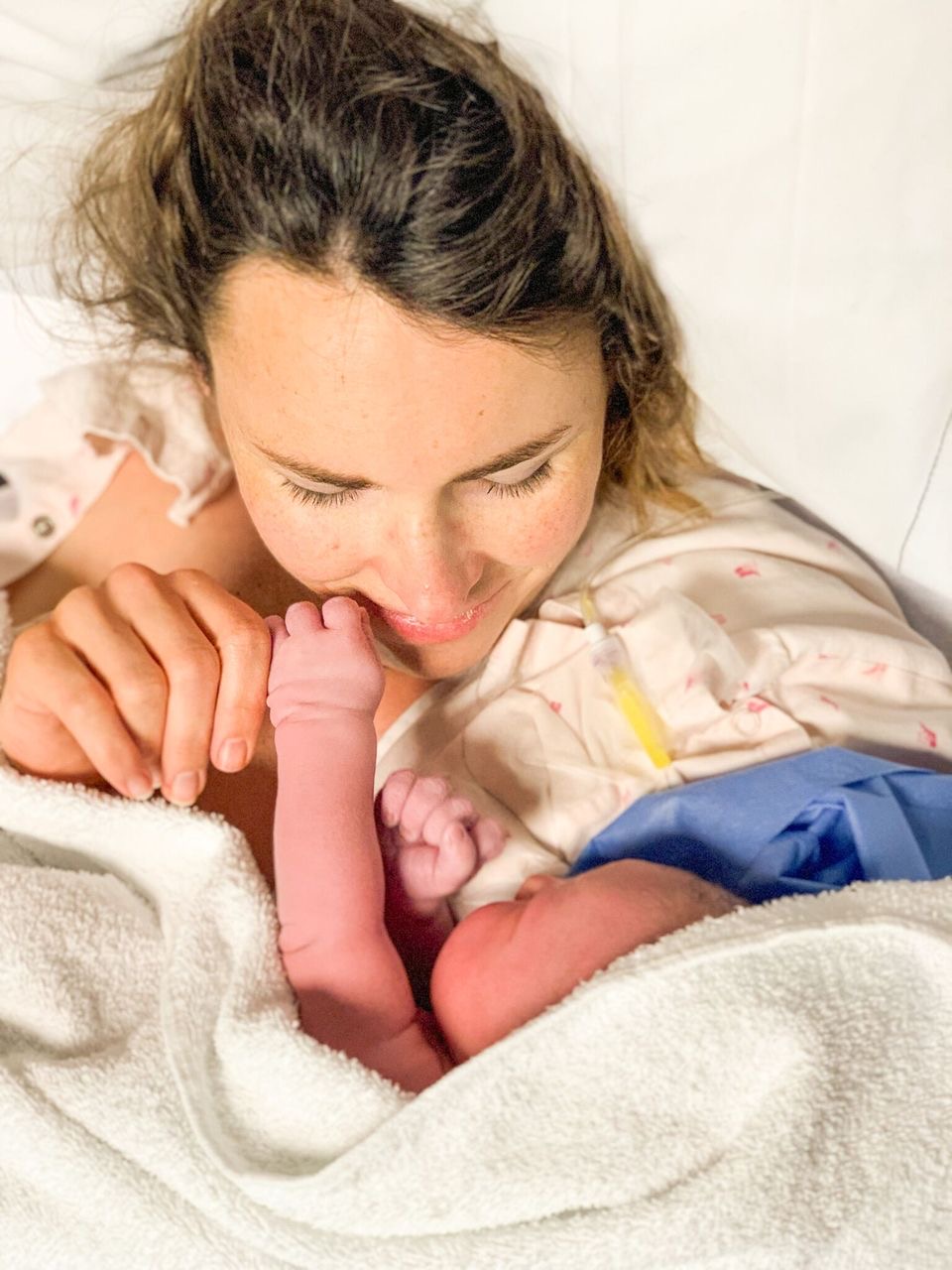
I worked with my body and my baby. At 4:30 p.m., I pushed him into the world — my husband, my doula, my nurse, and my doctor all there, cheering me on.
The moment they placed him on my chest, I felt something crack open. Not just love for my baby — though that was enormous — but a fierce, tear-soaked pride in what my body had just done. I kept saying it over and over: “We did it.”
And also: “That hurt like a mother.”
Why this matters: Your birth story — whatever it looked like — shaped you. Whether it was empowering or traumatic or somewhere in between, you deserve space to process it, honor it, and heal from it. That’s the entire reason Birth Halo exists.
What advocating for yourself in labor actually looks like
If you’re approaching an induction and feel uncertain about your options, know this: you are allowed to ask questions, propose alternatives, and have your preferences honored. Asking your provider to break your waters and wait before adding Pitocin is a legitimate, medically acceptable request. You don’t have to accept the default protocol.
A birth doula, a solid birth plan, and a care provider who listens can make an enormous difference — not just in your birth outcome, but in how you carry the experience afterward.
Ready to feel more prepared for birth and postpartum? Explore our courses →
Leave a Reply